
HIKROBOT
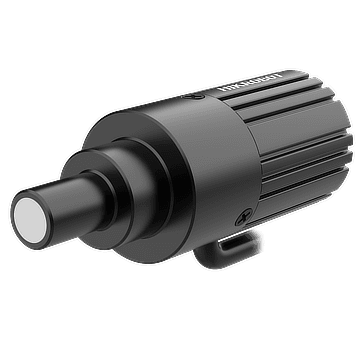
Spot light MV-LDSS-H-8-3-W
MV-LDSS-H-8-3-W
Point / mini spot, White, 6000 – 7000 K, Focused
Price and availability on request
Spot lights put light exactly where you need it, on a limited inspection area. They suit tight installations, features that have to be lit from one particular direction, and cases where broad area lighting would be overkill. Spot is not a uniform beam geometry, however: light spot, beam angle and usable working distance vary from model to model. Alongside light color and housing size, check distance, connection, power supply and IP rating. What settles it is whether the angle of incidence and the illuminated zone suit your field of view and your feature in the real setup.
130 products
No obligation · we usually reply within 24 hours on business days
HIKROBOT
MV-LDSS-H-8-3-W
Point / mini spot, White, 6000 – 7000 K, Focused
Price and availability on request
HIKROBOT
MV-LDSS-H-8-3-B
Point / mini spot, Blue, 465 – 475 nm, Focused
Price and availability on request
HIKROBOT
MV-LDSS-H-8-3-G
Point / mini spot, Green, 515 – 530 nm, Focused
Price and availability on request
HIKROBOT
MV-LDSS-H-8-3-R
Point / mini spot, Red, 620 – 630 nm, Focused
Price and availability on request
HIKROBOT
MV-LDSS-H-8-3-Y
Point / mini spot, Yellow, 580 – 595 nm, Focused
Price and availability on request

HIKROBOT
MV-LDFM-H-20-10-W
High-power / long-range, White, 6000 – 7000 K, Focused
Price and availability on request
HIKROBOT
MV-LDFM-H-20-5-IR850
High-power / long-range, Infrared, 850 nm, Focused
Price and availability on request

Falcon
FLBR-i70-W
Borescope light, White, Diffuse
Price and availability on request
Falcon
FLBR-i70-G
Borescope light, Green, Diffuse
Price and availability on request
Falcon
FLBR-i70-B
Borescope light, Blue, Diffuse
Price and availability on request
Falcon
FLBR-i70-SR24
Borescope light, Red, Diffuse
Price and availability on request

Falcon
FHBR-Si70-W
Borescope light, White, Diffuse
Price and availability on request
Falcon
FHBR-Si70-B
Borescope light, Blue, Diffuse
Price and availability on request
Falcon
FHBR-Si70-G
Borescope light, Green, Diffuse
Price and availability on request
Falcon
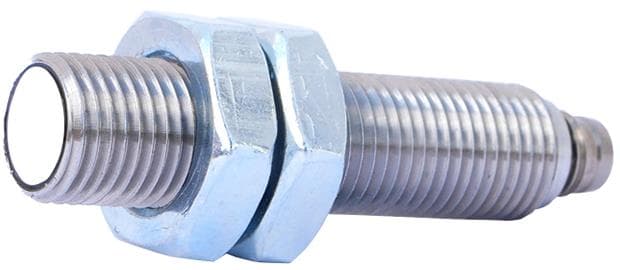
FHSP-M12-IP67-W-0
High-power / long-range, White, Focused
Price and availability on request
Falcon
FHSP-M12-IP67-W-0-BU24-3
High-power / long-range, White, Focused
Price and availability on request
Falcon
FHSP-M12-IP67-G-0
High-power / long-range, Green, 525 nm, Focused
Price and availability on request
Falcon
FHSP-M12-IP67-B-0
High-power / long-range, Blue, 470 nm, Focused
Price and availability on request
Falcon
FHSP-M12-IP67-R-0
High-power / long-range, Red, 626 nm, Focused
Price and availability on request

Falcon
FHLV-Si27N2-W24-STROBE
Coaxial coupling spot, White, Focused
Price and availability on request
Falcon
FHLV-Si27N2-W12-STROBE
Coaxial coupling spot, White, Focused
Price and availability on request
Falcon
FHLV-Si27N2-G12-STROBE
Coaxial coupling spot, Green, 535 nm, Focused
Price and availability on request
Falcon
FHLV-Si27N2-B24-STROBE
Coaxial coupling spot, Blue, 485 nm, Focused
Price and availability on request
Falcon
FHLV-Si27N2-B12-STROBE
Coaxial coupling spot, Blue, 485 nm, Focused
Price and availability on request
Falcon
FHLV-Si27N2-R24-STROBE
Coaxial coupling spot, Red, 630 nm, Focused
Price and availability on request
Falcon
FHLV-Si27N2-R-STROBE
Coaxial coupling spot, Red, 630 nm, Focused
Price and availability on request
Falcon
FHLV-Si27N2-IR-STROBE
Coaxial coupling spot, Infrared, 850 nm, Focused
Price and availability on request
Falcon
FHLV-Si27N2-UV-365-STROBE
Coaxial coupling spot, UV, 365 nm, Focused
Price and availability on request
Falcon
FHLV-Si27N2-UV-405-STROBE
Coaxial coupling spot, UV, Focused
Price and availability on request
Falcon
FHLV-Si27N2-W24-CONT
Coaxial coupling spot, White, Focused
Price and availability on request
Spot lights are incident-light lights: they illuminate the part from the camera side and concentrate the light on a small area. You can aim a spot light at the workpiece head-on, from the side or at a shallow angle. Each position changes which surfaces return light to the camera and where shadows fall. Side or shallow incidence brings out edges, embossing, scratches and differences in height. On specular surfaces, that same setup can dazzle the camera or wash the feature out. Start from the difference in brightness you need in the image, not from electrical power.
Housing diameter says little about the area that actually gets lit. Optics and beam angle govern how the light cone develops with distance. In the current range, information on illuminated area and working distance is not complete for every version. Where a value is missing, never carry it over from a similarly named model. Work from the exact data sheet and, on critical tasks, check the light spot in your planned setup.
Where a large field of view has to be lit evenly, a single spot light is usually the wrong tool. Several spots add alignment effort and can produce overlapping bright zones, so an area or bar light is often easier to reproduce. For compact, more symmetrical illumination close to the camera, a ring light tends to make more sense.
Depending on the model, the range covers white, visible monochromatic colors, UV and infrared. White light preserves color information. In monochrome imaging, the wavelength you choose shifts the contrast, because materials, printing and coatings reflect and absorb light differently. The nominal color therefore says nothing about how your part will look. UV and infrared applications need suitable sensors, optics and, where relevant, filters, and UV additionally calls for a protection concept.
Housing diameter, length, mounting and cable exit have to fit the installation space without blocking the camera view or the part transport. The portfolio spans different voltages and connectors, and neither a connector that fits mechanically nor a matching voltage proves compatibility.
IP rating and housing material only mean something for the exact version under the mounting conditions you plan. With dust, moisture, cleaning, vibration or elevated temperature, assess the complete installation including connector and cable. For trigger or strobe operation, check the approved pulse parameters and the synchronization with camera and process as well.
A dependable choice accounts for workpiece tolerances, varying part position, ambient light and your planned exposure time. Compare possible positions first, until the feature separates clearly from the background, and only then settle light type, light color and electrical connection. That order stops a powerful but geometrically unsuitable spot from winning the comparison.
Once you have found the right angle, fix distance, tilt and position mechanically and unambiguously. An adjustable mount makes trials easier, but it can also drift unnoticed in operation. Document the geometry you chose together with aperture, exposure time and controller values, and check limit positions of the workpiece and permissible surface variation. Where several spots are in play, their light cones should not overlap by accident, and every light needs a defined job. That turns a good trial image into a setup you can install, maintain and restore after a change.
Next technical step
Tell us the inspection feature, field of view, working distance, camera position and the installation space you have. A photo of the workpiece helps us judge reflections and shadows. We compare the documented optical, mechanical and electrical data and clearly state when an application trial is required.
Request help choosing a spot light