
Lighting for industrial machine vision
In industrial machine vision, lighting determines whether an inspection feature stands out clearly or barely registers at all. Shape, angle of incidence, light color and control all have to suit the surface, the motion and the camera. This overview leads to the common lighting geometries: from directed bar and spot lights through to area, ring and diffuse illumination. Start from the feature you need to inspect rather than from the highest light output. Where several arrangements look plausible, confirm the choice with a real part or with meaningful sample images.
Please choose the appropriate type:
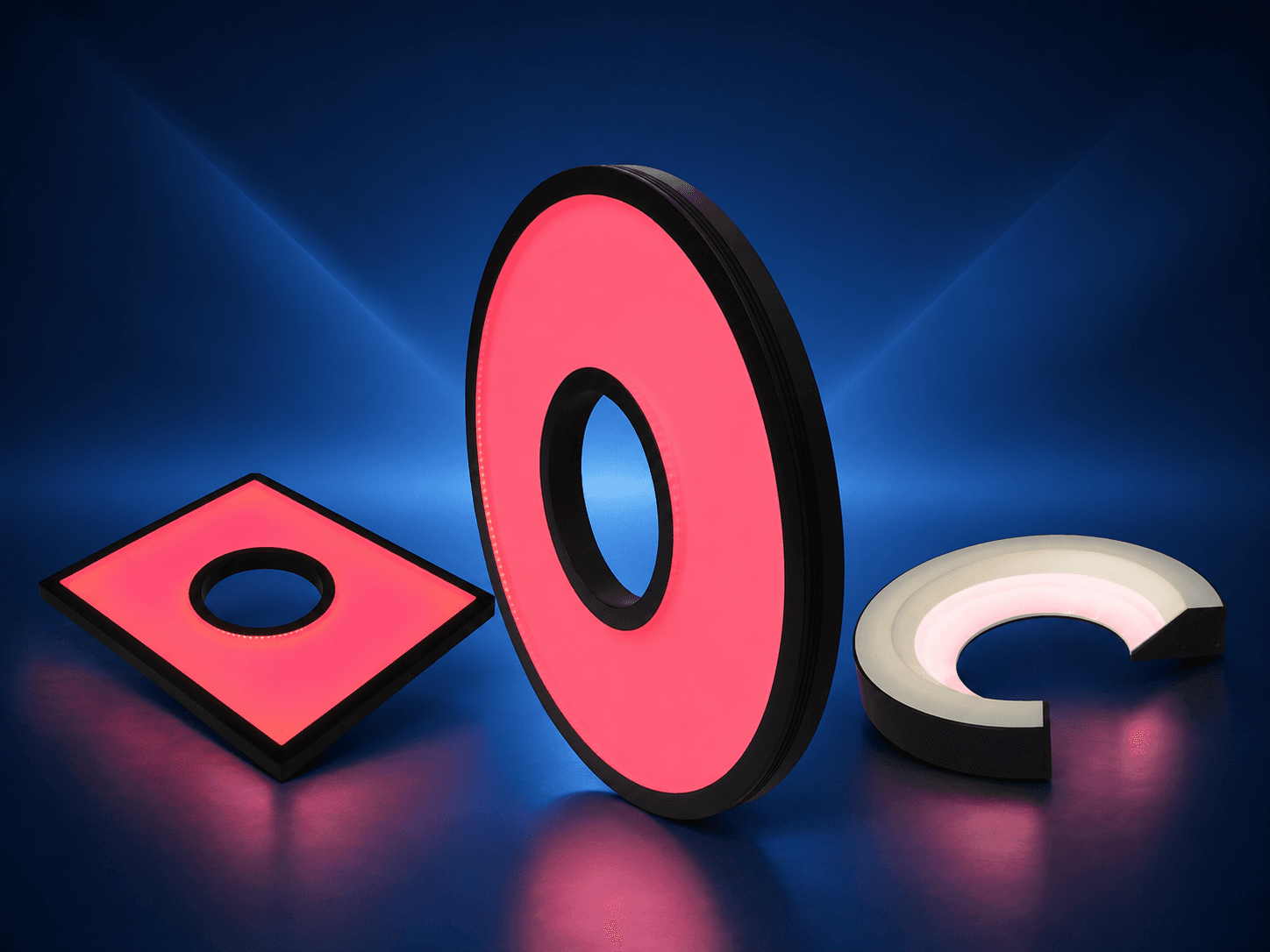
Backlights & flat domes
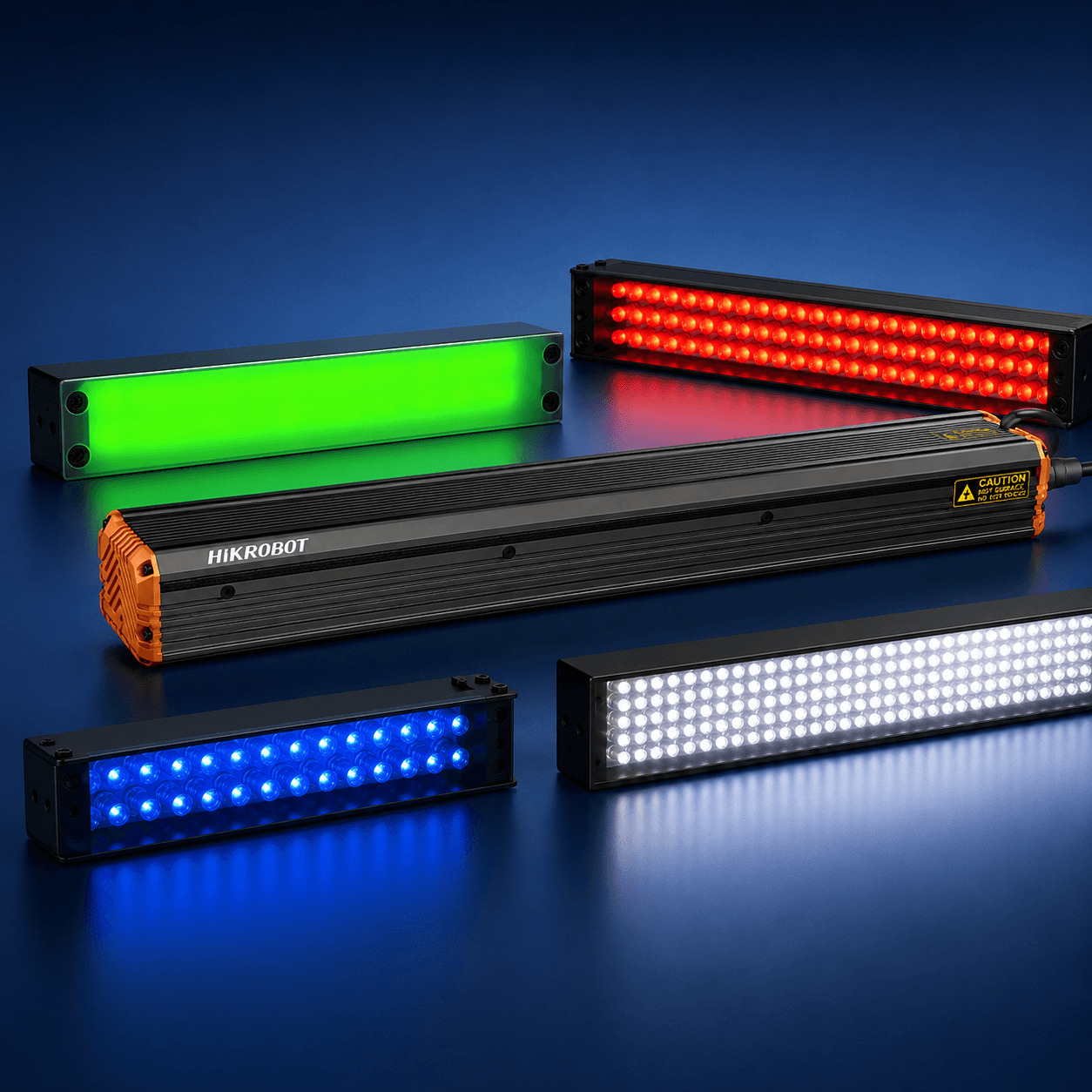
Bar lights
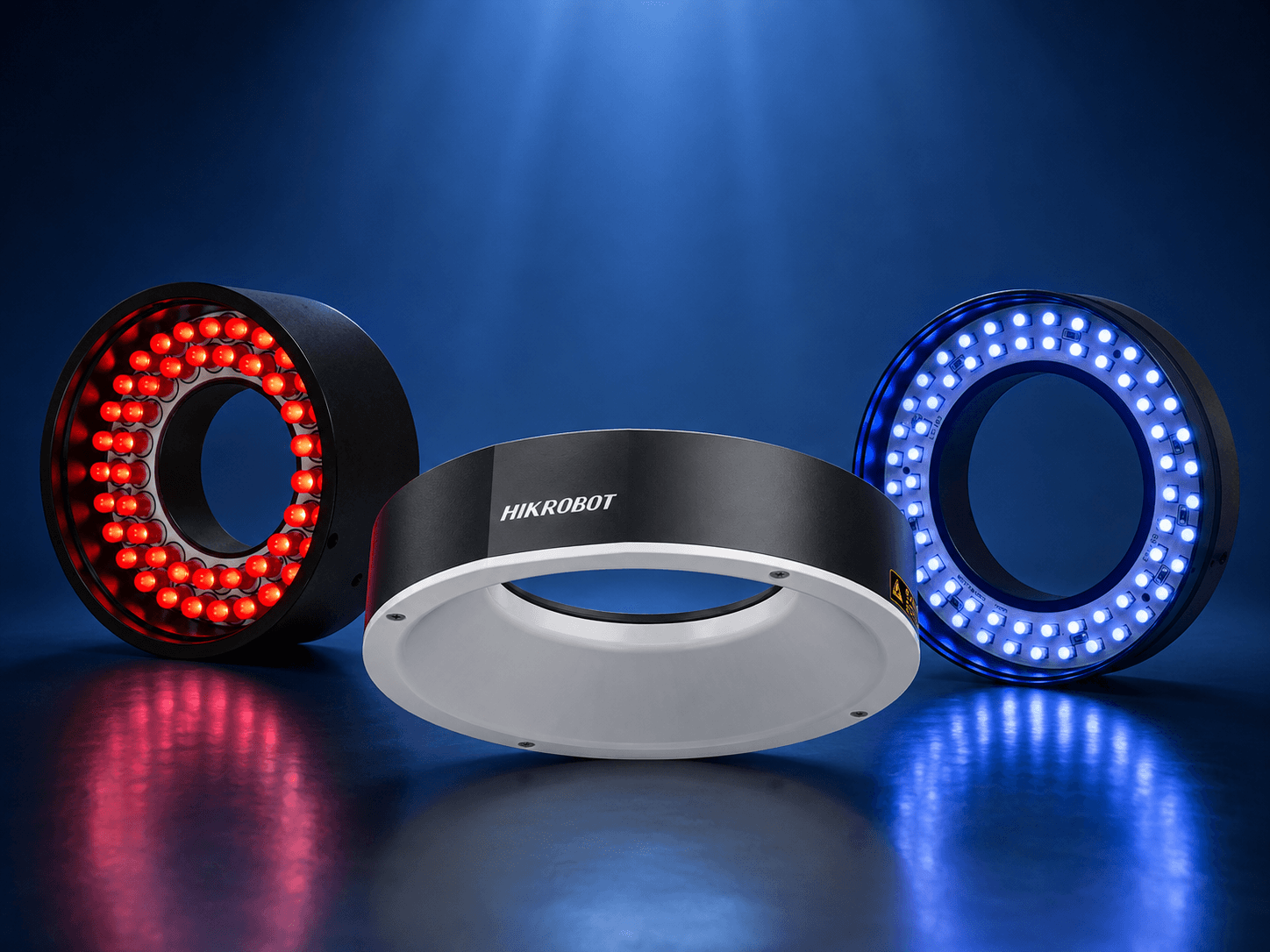
Ring lights
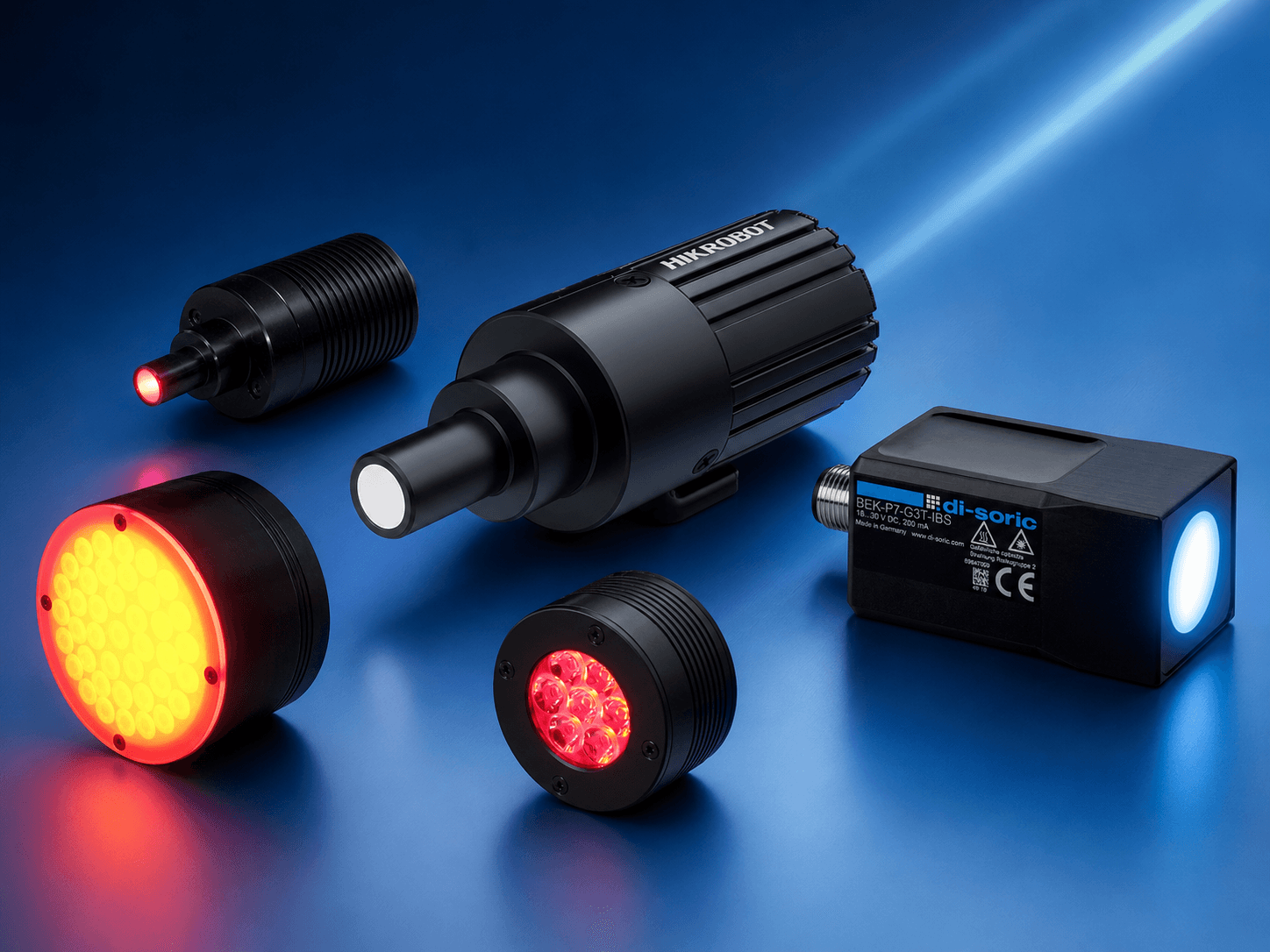
Spot lights
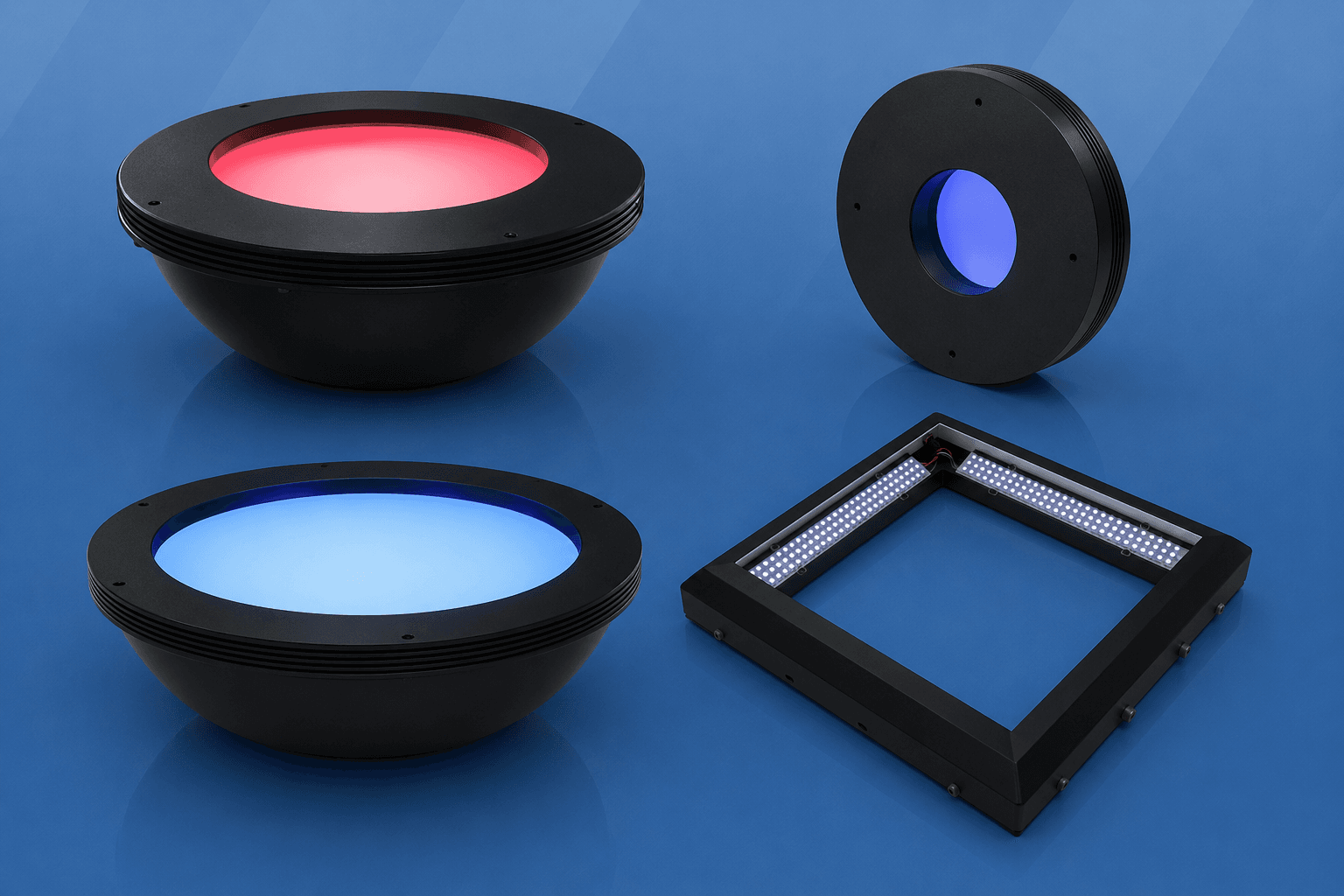
Dome lights
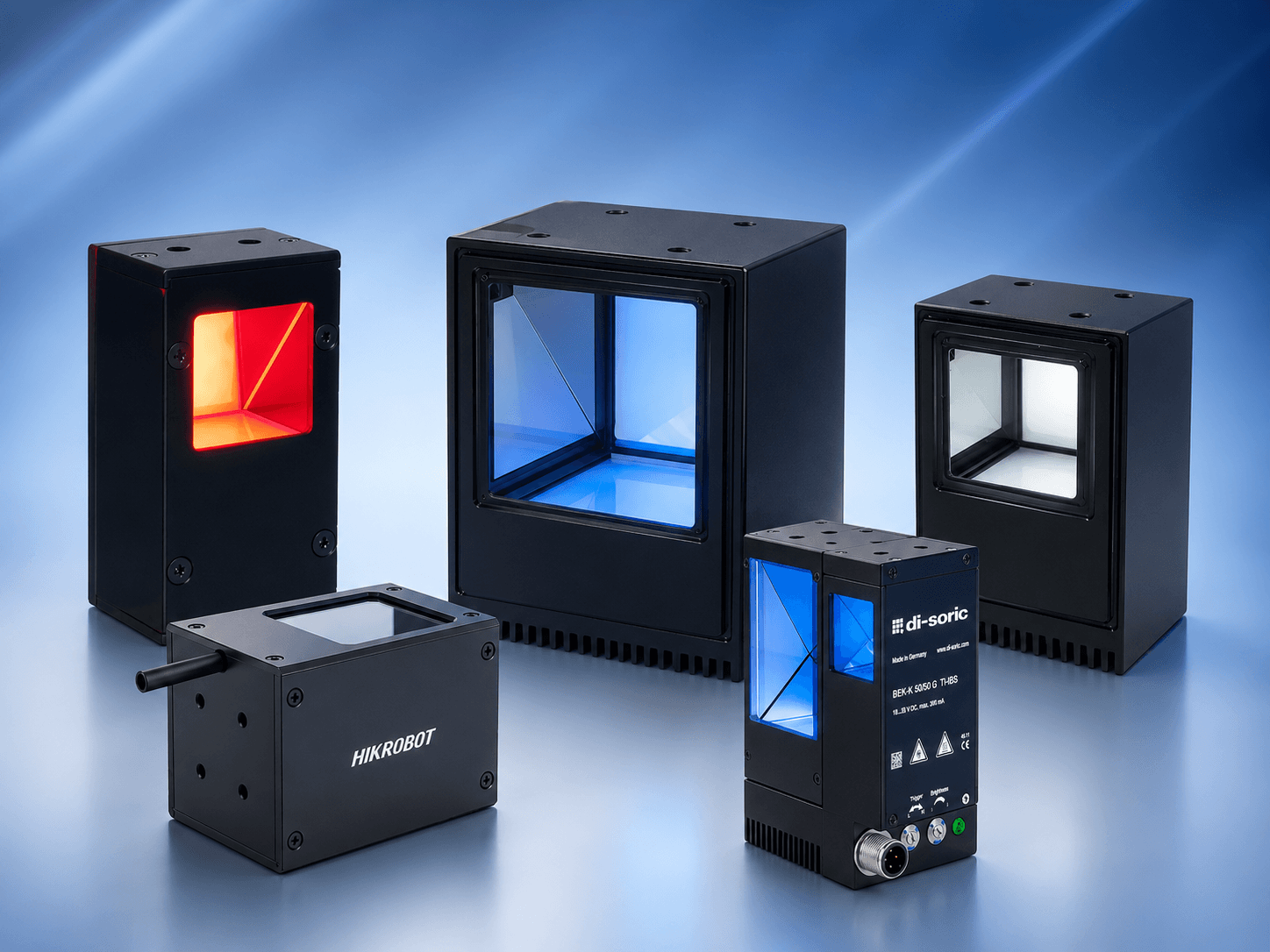
Coaxial lights
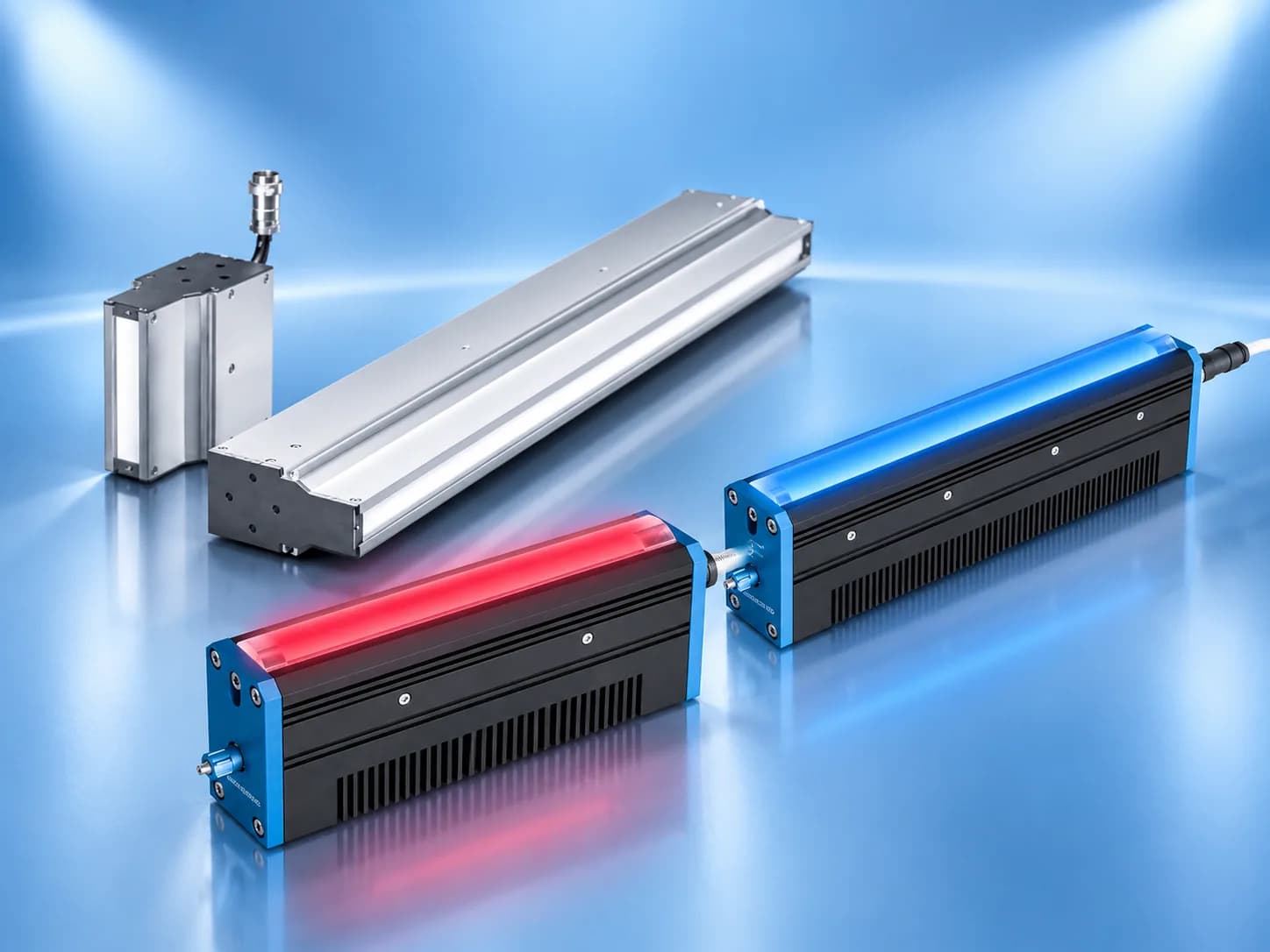
Line lights
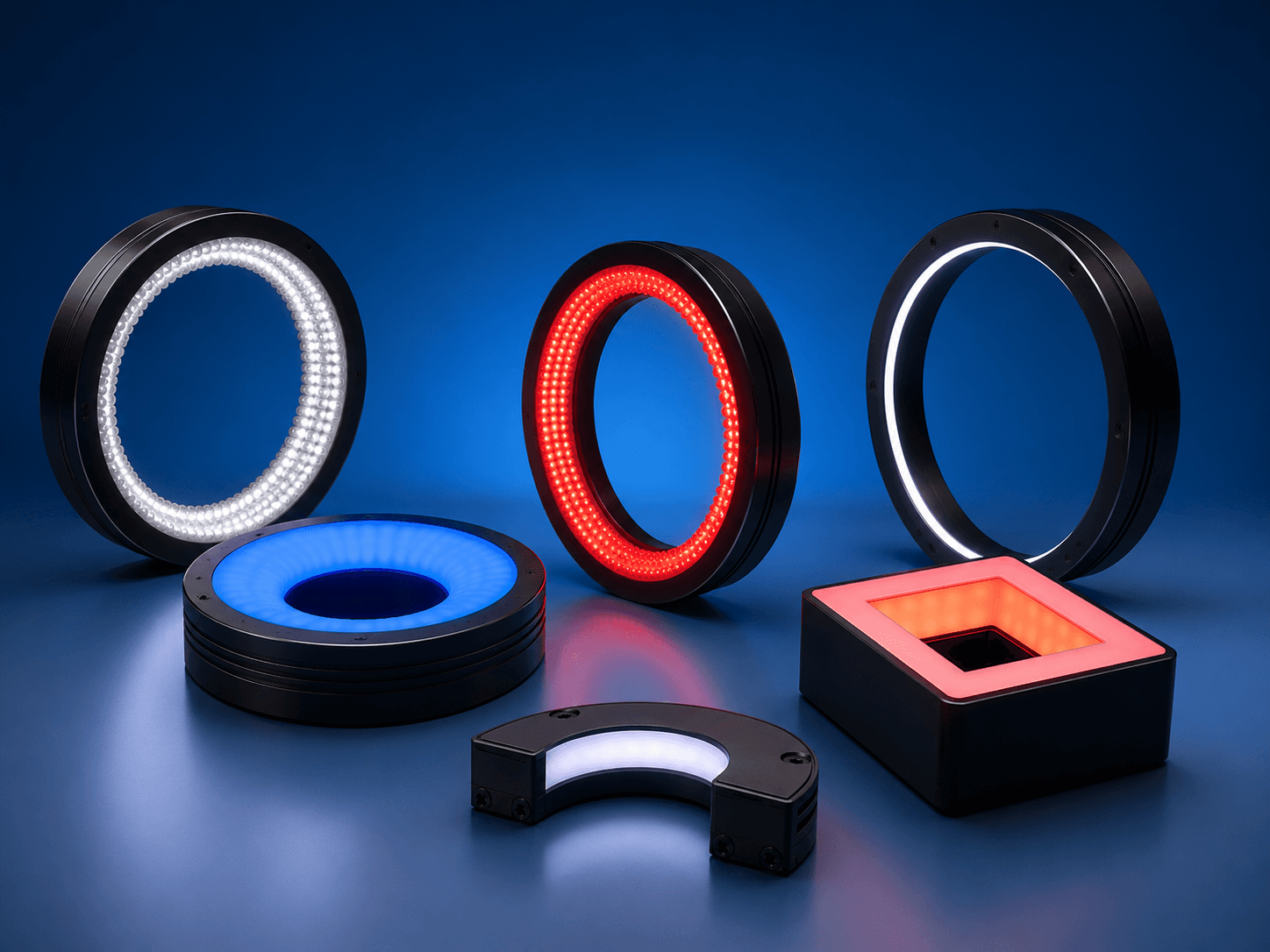
Dark field lights
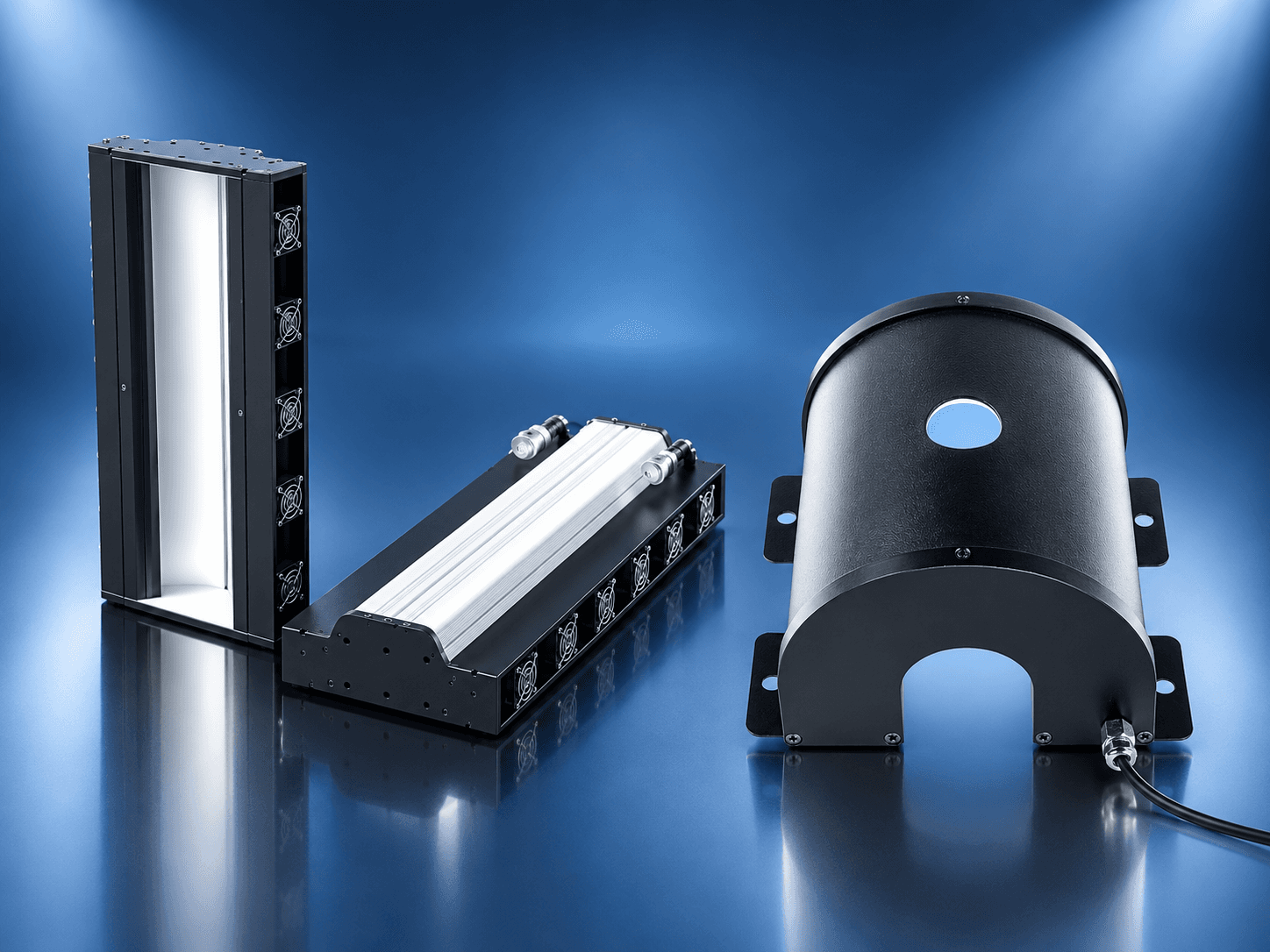
Tunnel lights
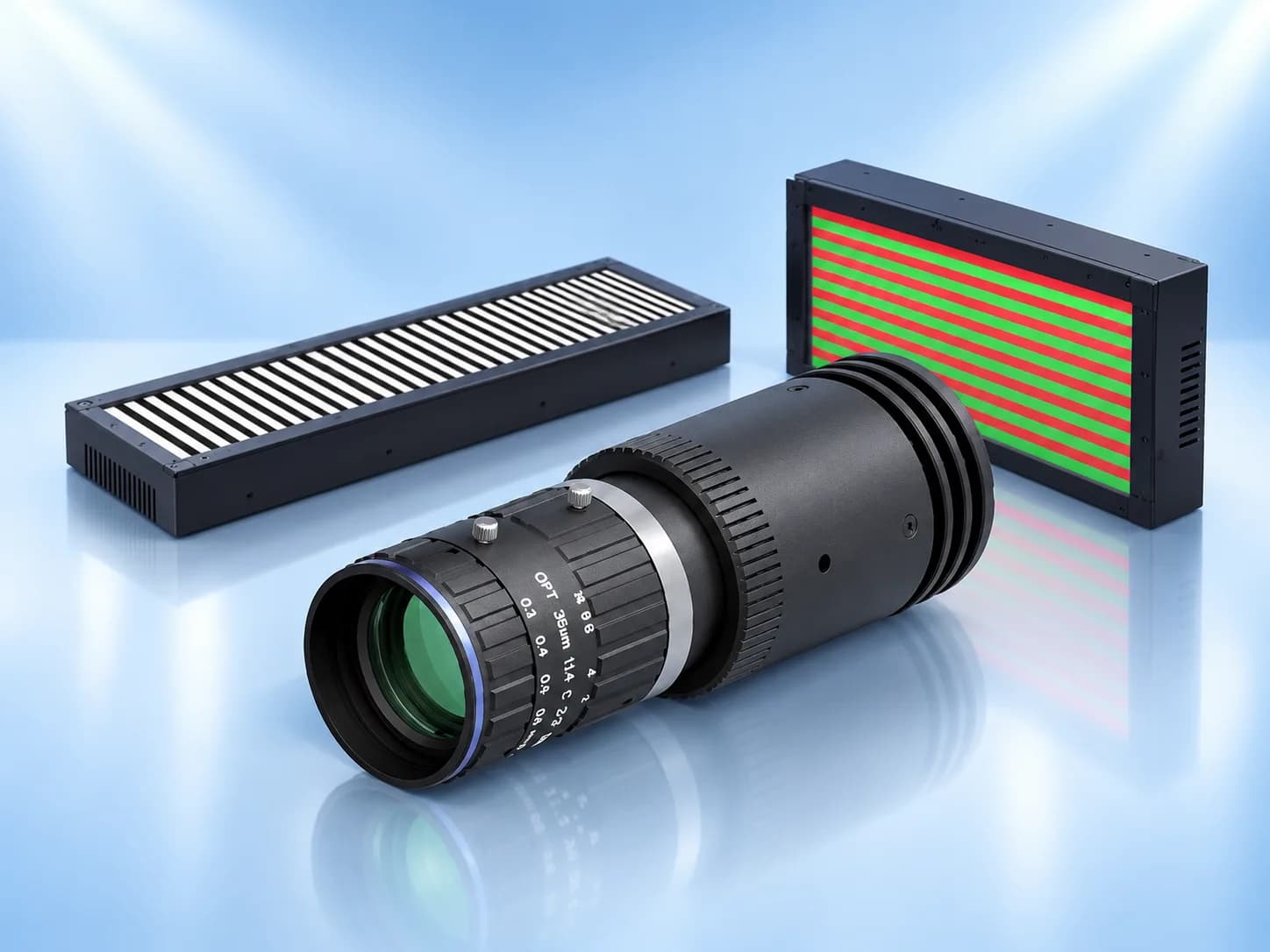
Pattern projection
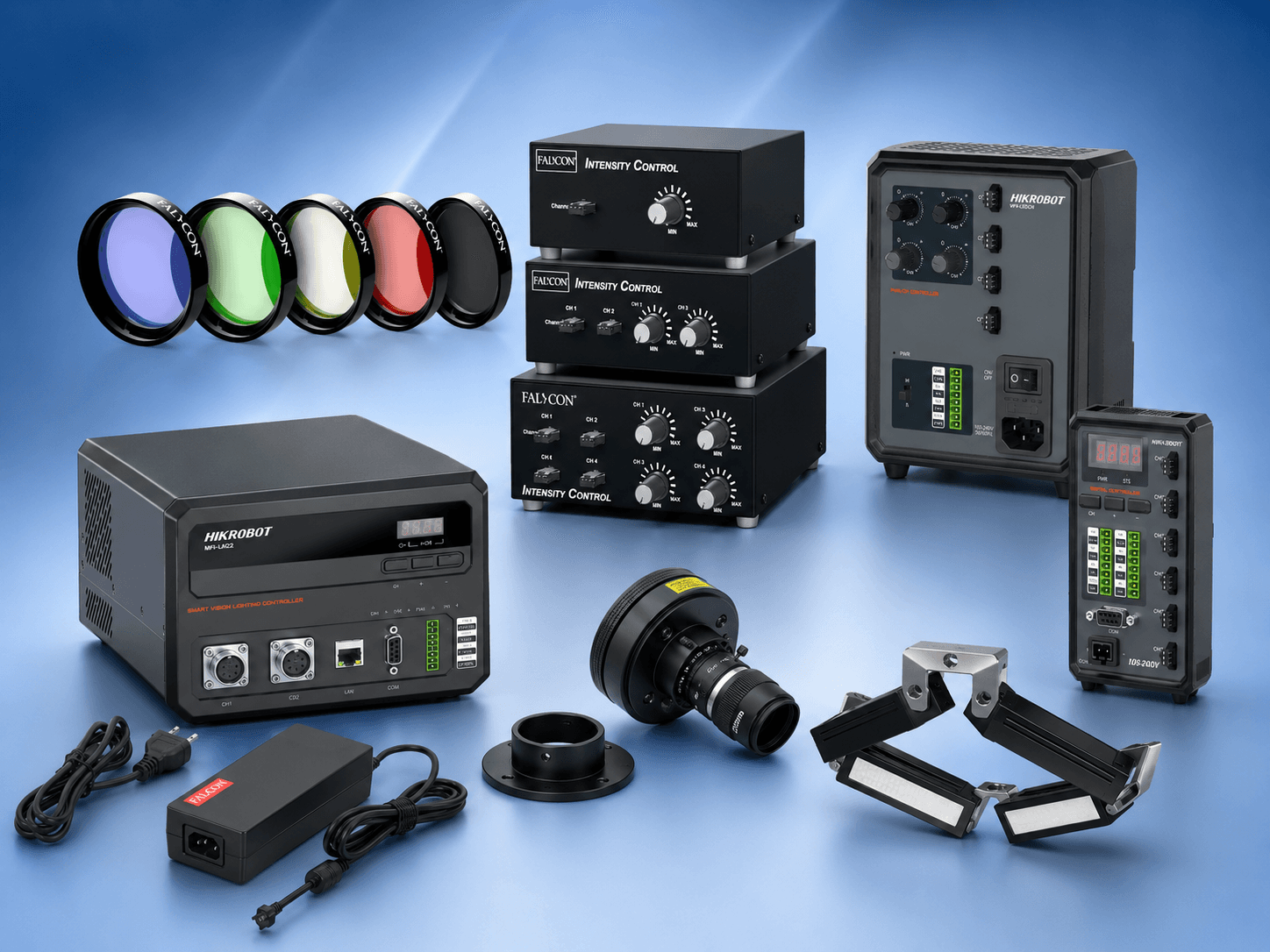
Lighting accessories & light controllers
Choosing lighting for your inspection task
From inspection feature to light geometry
A camera can only work with the contrast that actually appears in the image, so more light is not automatically better. Establish first whether you need to measure a contour, read a print, distinguish a color or reveal a scratch. That answer narrows down the type of lighting.
Used as a backlight, area lighting sits behind the part. It produces a silhouette and suits outside dimensions, holes, gaps and presence checks, while surface detail stays secondary. Bar lights introduce light from a defined direction. A shallow angle brings out edges and scattering structures, and several bars can even out shadows or cover a long field of view.
Dome lights spread diffuse light across a wide solid angle and can soften harsh reflections on curved parts. Coaxial lighting works differently: a beam splitter directs light onto the object roughly along the camera axis. That helps on flat, reflective surfaces, but it is not diffuse illumination. Dark-field lighting uses a very shallow angle so that edges, engravings or defects scatter light toward the camera. Ring lights allow a compact arrangement close to the lens, and spot lights concentrate light on small or hard-to-reach areas.
Wavelength, camera and material work together
Depending on the series, the range covers white, red, blue and green versions along with infrared, UV and a few RGB models. No light color is inherently better. Each one shifts the contrast according to material, coating, printing ink, sensor and optical filter. White light preserves color information, while monochromatic light can amplify a difference in brightness. Consider infrared or UV only once you have verified the material response, camera sensitivity, lens transmission and eye safety.
Never infer control and mounting from the product family
Most lights run on 24 V, yet some high-power and strobe versions need an approved constant-current or flash controller. IP rating, connectors, operating temperature and cooling also vary between individual part numbers, so take these values from the specific data sheet. For continuous operation, check image stability once the light has reached thermal equilibrium.
Confirm repeatability in day-to-day operation
A light is only the right one when contrast holds up across the permissible variation in part position, material and environment, not just in a single image. Ambient light, soiled protective windows and part tolerances all change the picture. Plan for exposure headroom, a suitable mounting position and proper intensity control. Optical filters can suppress changing ambient light, provided they match the wavelength. On series equipment, document distance, angle and operating parameters so the setup can be restored after maintenance. You then select a version on measurable image characteristics instead of subjective brightness.
For a sound shortlist we need a photo or sample part, the feature marked up, the material, field of view, working distance, motion and the exposure time you have in mind, plus camera, lens and installation space. When the response of reflective, transparent or highly variable parts cannot be derived from data sheets, a feasibility study is the more reliable next step. Our lighting FAQ covers the underlying principles in more depth.
Incident or transmitted light?
The most important difference between the designs is the direction the light comes from. Incident light illuminates the part from the camera side and reveals surface, print and structure. Transmitted light sits behind the part and shows contour and dimension as a sharp silhouette. Ring, bar, area, dome, coaxial and spot lights work in incident light. Backlights, which we carry within the area lighting range, work in transmitted light; dark-field lights use very shallow incident light. Which design you need therefore depends first on whether you are inspecting the surface or the outer contour.
Common questions about selection
- Which type of lighting should I compare first?
- Start from the inspection feature. Backlighting suits contours, bar or dark-field lighting suits directed surface contrast, diffuse dome lighting suits curved reflective parts, and coaxial lighting suits certain flat reflective surfaces. The final choice depends on the shape of the part and the camera view.
- When is colored light a better choice than white light?
- Whenever a particular wavelength widens the difference in brightness between the feature and its background. The effect depends on material, color, coating, sensor and filter, so test the version on an original part for anything critical.
- Do I need continuous lighting or a strobe?
- Continuous lighting keeps setup and observation simple. A strobe can deliver more light at the moment of capture when parts move and exposure times are short. The data sheet for the exact light states whether strobing is permitted and which controller it requires.
Next technical step
Select lighting around your inspection task
Send us a photo of the part, the inspection feature, the field of view and the working distance. We narrow down light geometry, wavelength and control, and we test anything that is still open rather than guessing at it.
Discuss your inspection task