

Falcon
Dome light FHDM-Si200-W
FHDM-Si200-W
High-power dome light, Ø 160 mm, opening Ø 45 mm, White
Price and availability on request
Dome lights spread light across a curved inner surface and illuminate the workpiece from many directions at once, so hard bright spots and shadows come out weaker than under direct front lighting. That helps on glossy, curved or geometrically busy parts. Diameter alone will not settle the choice, though: field of view, camera aperture, working distance, light color, installation space and connection all play a part. Use the filters to narrow the range, then check the exact model data. On critical surfaces, a trial with real parts remains the more reliable basis.
93 products
Falcon
FHDM-Si200-W
High-power dome light, Ø 160 mm, opening Ø 45 mm, White
Price and availability on request
Falcon
FHDM-Si200-G
High-power dome light, Ø 160 mm, opening Ø 45 mm, Green, 525 nm
Price and availability on request
Falcon
FHDM-Si200-B
High-power dome light, Ø 160 mm, opening Ø 45 mm, Blue, 470 nm
Price and availability on request

Falcon
FLDM-Si250-W
Classic dome light, Ø 212 mm, opening Ø 50 mm, White
Price and availability on request

Falcon
FLDM-i250-G-UPDATE-FOLLOWS
Classic dome light, Ø 212 mm, opening Ø 50 mm, Green, 525 nm
Price and availability on request
Falcon
FLDM-i250-B-UPDATE-FOLLOWS
Classic dome light, Ø 212 mm, opening Ø 50 mm, Blue, 470 nm
Price and availability on request
Falcon
FLDM-i250-R24-UPDATE-FOLLOWS
Classic dome light, Ø 212 mm, opening Ø 50 mm, Red
Price and availability on request

Falcon
FHDM-Si250-W
High-power dome light, Ø 212 mm, opening Ø 50 mm, White
Price and availability on request
Falcon
FHDM-Si250-G
High-power dome light, Ø 212 mm, opening Ø 50 mm, Green, 525 nm
Price and availability on request
Falcon
FHDM-Si250-B
High-power dome light, Ø 212 mm, opening Ø 50 mm, Blue, 470 nm
Price and availability on request

Falcon
FLDM-i380-W-UPDATE-FOLLOWS
Classic dome light, Ø 295 mm, opening Ø 90 mm, White
Price and availability on request
Falcon
FLDM-i380-G-UPDATE-FOLLOWS
Classic dome light, Ø 295 mm, opening Ø 90 mm, Green, 525 nm
Price and availability on request
Falcon
FLDM-i380-B-UPDATE-FOLLOWS
Classic dome light, Ø 295 mm, opening Ø 90 mm, Blue, 470 nm
Price and availability on request
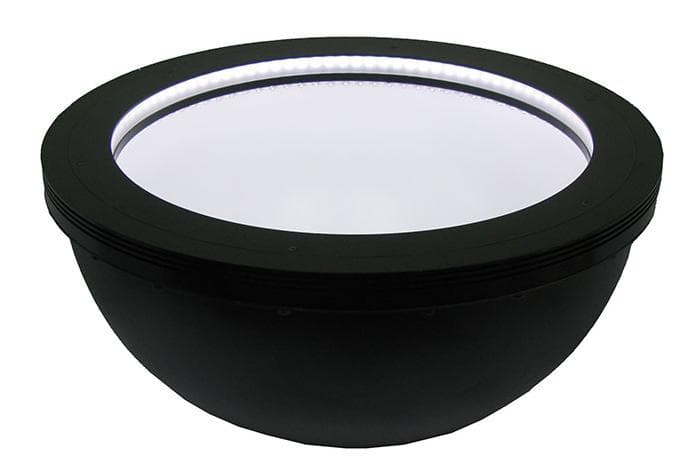
Falcon
FLDM-i380-LA1-G
Classic dome light, Ø 295 mm, opening Ø 90 mm, Green, 525 nm
Price and availability on request
Falcon
FLDM-i380-LA1-B
Classic dome light, Ø 295 mm, opening Ø 90 mm, Blue, 470 nm
Price and availability on request
Falcon
FLDM-i380-LA1-W
Classic dome light, Ø 295 mm, opening Ø 90 mm, White
Price and availability on request
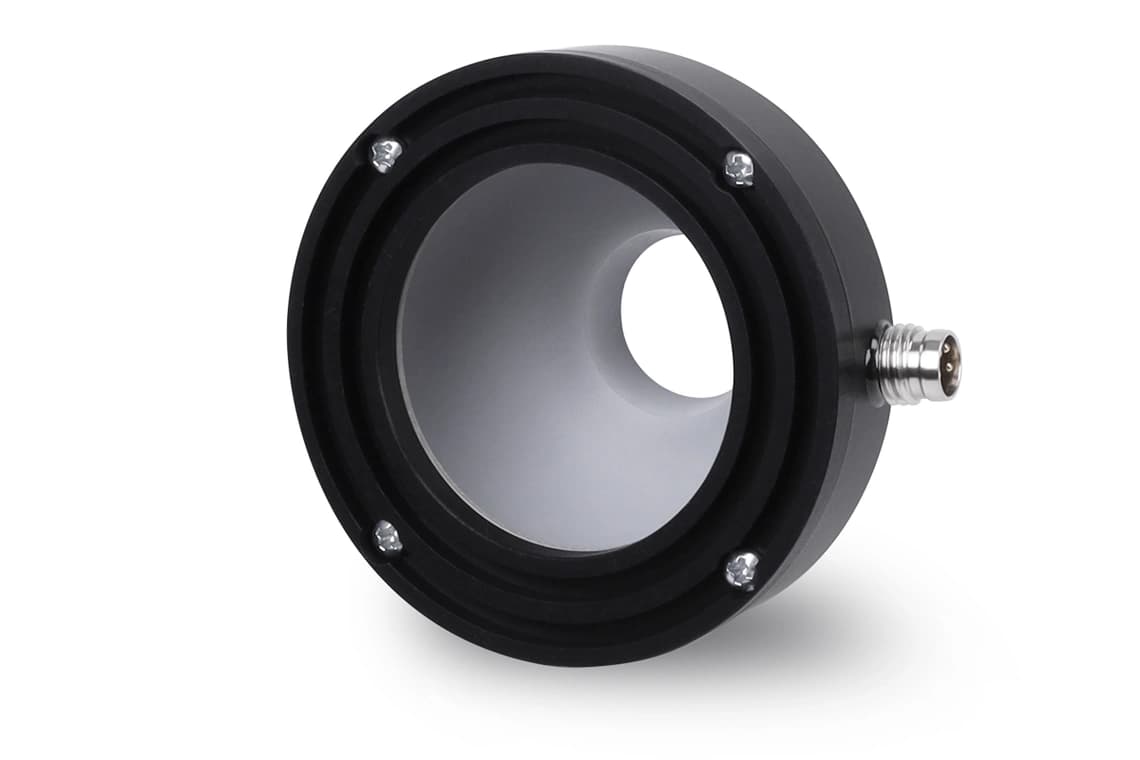
di-soric
BE-DOME6050-RGB-T4
Classic dome light, Ø 60 mm, RGB (red 630 nm · green 530 nm · blue 470 nm)
Price and availability on request

di-soric
BE-DOME10070-G0-T4
Classic dome light, Ø 100 mm, Infrared, 850 nm
Price and availability on request
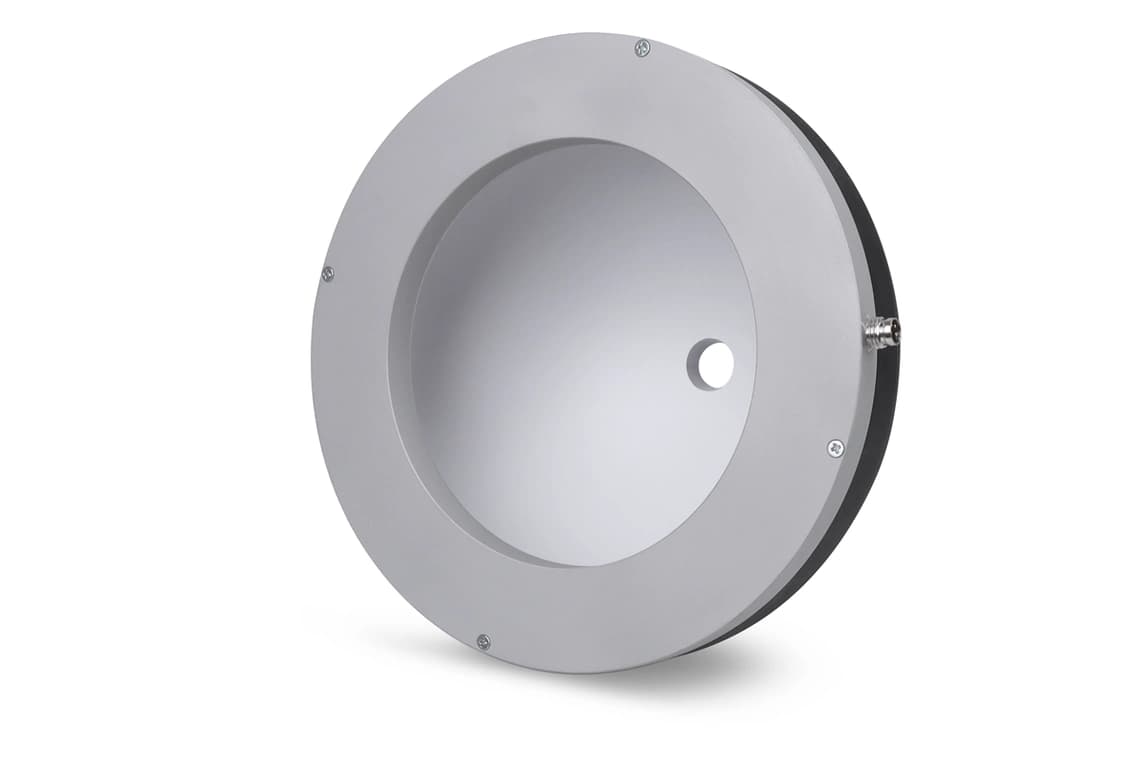
di-soric
BE-DOME10070-G1-T4
Classic dome light, Ø 100 mm, Red, 617 nm
Price and availability on request

di-soric
BE-DOME10070-G3-T4
Classic dome light, Ø 100 mm, Blue, 470 nm
Price and availability on request

di-soric
BE-DOME10070-G5-T4
Classic dome light, Ø 100 mm, White, 6500 K
Price and availability on request

di-soric
BE-DOME10070-RGB-T6
Classic dome light, Ø 100 mm, RGB (red 630 nm · green 530 nm · blue 470 nm)
Price and availability on request
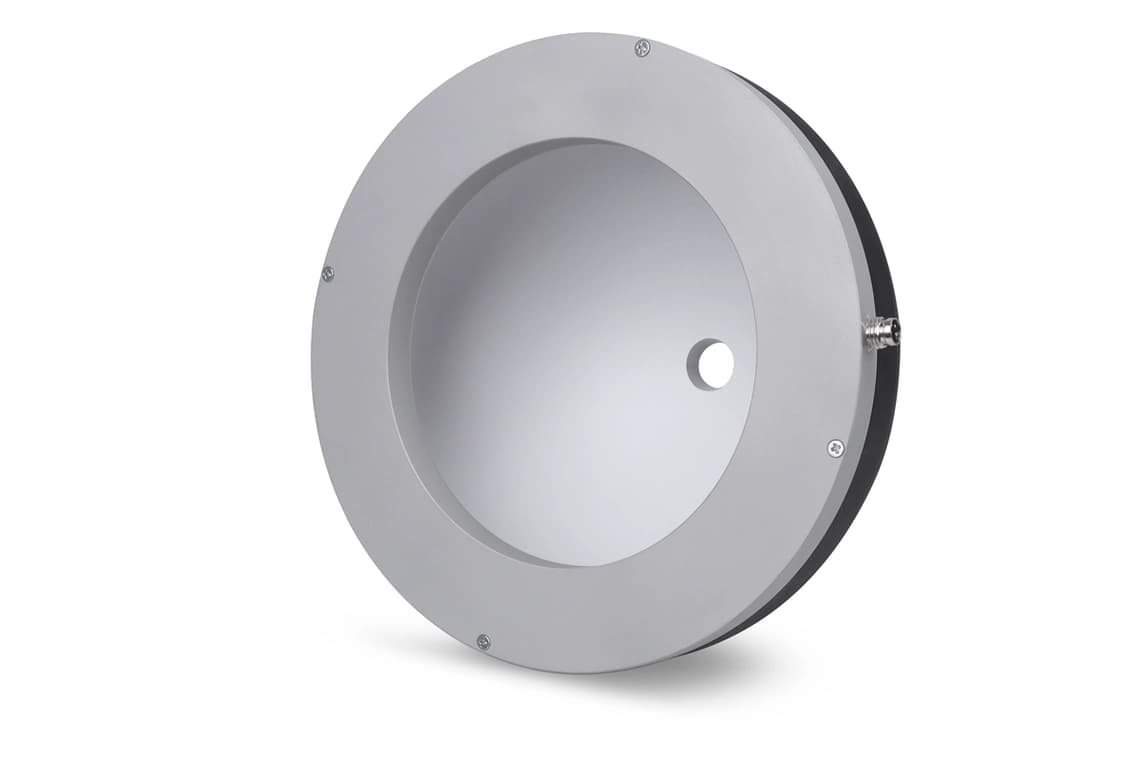
di-soric
BE-DOME170110-G1-T4
Classic dome light, Ø 170 mm, Red, 635 nm
Price and availability on request

OPT
OPT-RID52-R
Classic dome light, Ø 24.5 mm, opening Ø 9 mm, Red
Price and availability on request
OPT
OPT-RID52-W
Classic dome light, Ø 24.5 mm, opening Ø 9 mm, White
Price and availability on request
OPT
OPT-RID52-G
Classic dome light, Ø 24.5 mm, opening Ø 9 mm, Green
Price and availability on request
OPT
OPT-RID52-B
Classic dome light, Ø 24.5 mm, opening Ø 9 mm, Blue
Price and availability on request
OPT
OPT-RID80-R
Classic dome light, Ø 50 mm, opening Ø 20 mm, Red
Price and availability on request
OPT
OPT-RID80-W
Classic dome light, Ø 50 mm, opening Ø 20 mm, White
Price and availability on request
OPT
OPT-RID80-G
Classic dome light, Ø 50 mm, opening Ø 20 mm, Green
Price and availability on request
Dome lights are incident-light lights: they span the part from the camera side and illuminate it diffusely from a wide solid angle. A dome light is worth considering when direct light throws disturbing reflections or when the shape of the workpiece leaves surfaces unevenly lit. Before you pick a model, establish what has to be separated in the image: contour from background, print from surface, coating from base material, or a specific defect. Diffuse light evens out jumps in brightness, yet it does not make a surface reflection-free and it will not reliably reveal every feature.
The illuminated zone has to cover the relevant field of view, while the free aperture must not restrict the viewing angle of camera and lens or leave a dark patch in the image. Compare the dome or emitting surface diameter, camera aperture and documented working distance for the exact version. In the setup itself, check lens dimensions, cable exit, mounting, part feeding and access for cleaning and maintenance. A larger light is no advantage if it makes installation unnecessarily awkward.
Depending on the model, the current range covers white, visible monochromatic colors, infrared, UV and RGB. White light suits cases where color information has to survive. With a monochrome camera, the right monochromatic wavelength shifts the contrast between material, print and coating, and how far it shifts depends on the real workpiece, sensor, lens and any filter in use. UV and infrared are no universal fix, and UV applications call for a suitable protection concept as well.
Supply, power consumption and connectors differ between product families. The same nominal voltage or a connector that happens to fit proves nothing about full compatibility. If you want to dim, trigger or synchronize the light with the exposure, both light and controller have to support that mode explicitly. Take permissible electrical values and pulse conditions only from the documentation for the exact model version.
On flat specular surfaces, a coaxial light often works better. Dark-field lighting emphasizes edges, elevations and fine surface features. Ring lights give you compact front-lighting setups but act more directionally. Area and bar lights suit larger or elongated zones, and spots put light onto a limited area from a defined direction.
On demanding surfaces, power and product class alone will not tell you which geometry gives the most stable separation. Comparing on the real part with the intended camera, optics, exposure time and installation situation removes most of that risk. Do not stop at one successful image; check different part positions, permissible versions and ambient light.
One clean good part in a favorable position is not enough for sign-off. Bring known good and bad parts, permissible color and surface versions and different positions into the comparison, and record camera, lens, aperture, exposure time, lighting position and controller values as you go. That keeps it traceable which conditions produced the contrast you settled on. Check as well whether contamination, ambient light or mechanical tolerances change the diffuse effect. Those results give you dependable setting limits; a general product description never will.
Next technical step
Send us the inspection feature, field of view, working distance, installation space and, if you can, an image of the workpiece. We compare the geometry and documented model data against your application and name the open questions. Where the material response cannot be predicted reliably, we recommend a practical comparison.
Request help selecting a dome light