

Falcon
Light strip F2DL-Si210x27-B
F2DL-Si210x27-B
210 × 27 mm, Blue, 470 nm
Price and availability on request
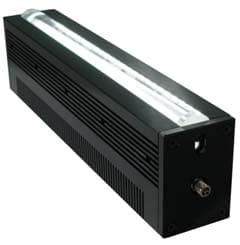
Bar lights bring light into the field of view from a narrow, elongated source. You can aim the mounting angle and distance precisely at edges, surfaces or long inspection areas. The range covers a variety of lengths as well as versions for continuous and strobe operation, white and colored light, infrared and UV, depending on the individual series. Length and power alone will not settle the choice: the emitting area, working distance, heat dissipation, controller, connector and IP rating of the exact version matter just as much.
950 products
Falcon
F2DL-Si210x27-B
210 × 27 mm, Blue, 470 nm
Price and availability on request
Falcon
F2DL-Si210x27-G
210 × 27 mm, Green, 525 nm
Price and availability on request
Falcon
F2DL-Si210x50-W
210 × 50 mm, White
Price and availability on request
Falcon
F2DL-Si210x50-G
210 × 50 mm, Green
Price and availability on request
Falcon
F2DL-Si210x50-B
210 × 50 mm, Blue
Price and availability on request

Falcon
F2DL-Si315x15-G
315 × 15 mm, Green
Price and availability on request
Falcon
F2DL-Si315x15-B
315 × 15 mm, Blue
Price and availability on request
Falcon
F2DL-Si315x15-R24
315 × 15 mm, Red
Price and availability on request
Falcon
F2DL-Si315x15-UV24-375
315 × 15 mm, UV
Price and availability on request

Falcon
F2DL-Si315x27-W
315 × 27 mm, White
Price and availability on request
Falcon
F2DL-Si315x27-G
315 × 27 mm, Green
Price and availability on request
Falcon
F2DL-Si315x27-B
315 × 27 mm, Blue
Price and availability on request
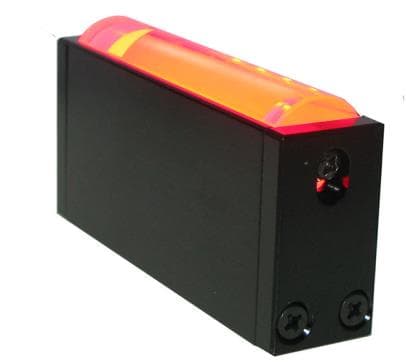
Falcon
FLLN-Si50-W
50 × 16 mm, White, Line focus
Price and availability on request
Falcon
FLLN-Si50-R24
50 × 16 mm, Red, Line focus
Price and availability on request

Falcon
FHLN-Si50-W
50 × 15 mm, White, Line focus
Price and availability on request
Falcon
FHLN-Si50-G
50 × 15 mm, Green, 535 nm, Line focus
Price and availability on request
Falcon
FHLN-Si50-B
50 × 15 mm, Blue, 470 nm, Line focus
Price and availability on request
Falcon
FLLN-Si100-W
100 × 15 mm, White, Line focus
Price and availability on request
Falcon
FLLN-Si100-R24
100 × 15 mm, Red, 626 nm, Line focus
Price and availability on request
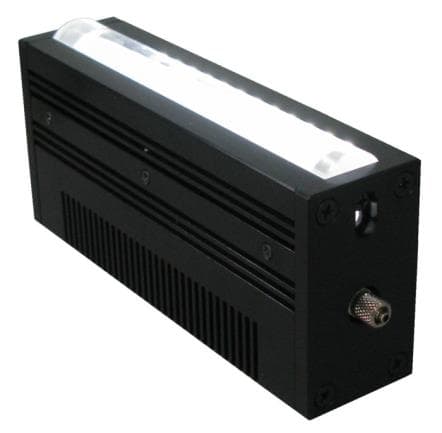
Falcon
FHLN-Si100-W
100 × 15 mm, White, Line focus
Price and availability on request
Falcon
FHLN-Si100-R24
100 × 15 mm, Red, 626 nm, Line focus
Price and availability on request
Falcon
FHLN-Si100-IR24
100 × 15 mm, Infrared, 850 nm, Line focus
Price and availability on request
Falcon
FLLN-Si150-W
150 × 15 mm, White, Line focus
Price and availability on request
Falcon
FLLN-Si150-R24
150 × 15 mm, Red, Line focus
Price and availability on request
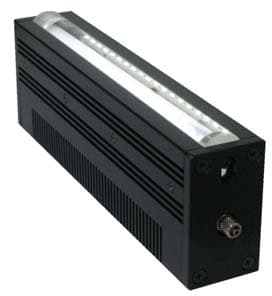
Falcon
FHLN-Si150-W
150 × 15 mm, White, Line focus
Price and availability on request

Falcon
FHLNX-Si150-W
150 × 20 mm, White, Line focus
Price and availability on request
Falcon
FLLN-Si180-W
180 × 15 mm, White, Line focus
Price and availability on request
Falcon
FLLN-i180-R24-UPDATE-FOLLOWS
180 × 15 mm, Red, Line focus
Price and availability on request
Falcon
FHLN-Si200-W
200 × 15 mm, White, Line focus
Price and availability on request

Falcon
FHLNX-Si200-W
200 × 20 mm, White, Line focus
Price and availability on request
Bar lights are incident-light lights: they sit on the camera side and bring directed light onto the part from an angled source. A single bar light gives you a clear, deliberate direction of light. Mounted steeply it acts mainly as bright front lighting. At a shallow angle it emphasizes raised and recessed structures, because edges scatter light toward the camera and small differences in height cast shadows. Changing the angle therefore often achieves more than adding light output.
Two opposing bars reduce one-sided shadows and suit elongated parts. Arranging several bars around the field of view makes the illumination more even, but it takes space, mounts and coordinated control. On glossy surfaces, a diffuser or crossed polarization will tame reflections; both cost light, so allow for that in aperture and exposure time. If you plan to work exclusively at a very shallow angle, compare a dedicated dark-field light as well.
The length of the housing tells you little about the area that is actually lit. What matters is the emitting area, the beam angle and the intended working distance. The light field should cover the relevant camera field of view including the expected variation in part position, and no fixed percentage margin will do that job for you. At short distances, individual LED structures or local differences in brightness can become visible. Moving the light farther away improves blending but reduces intensity at the object.
On long inspection areas, do not judge the center alone. An image taken with the final camera settings shows whether contrast holds up at both ends. Where several bars are planned, their angle and intensity have to be adjustable in a repeatable way.
Depending on the model, the listed series cover white, red, blue, green, RGB, infrared and UV, with 850 nm and 940 nm among the infrared options. The wavelength has to suit the material, camera sensitivity, lens and filter. A model name on its own proves nothing about suitability for a specific inspection.
24 V is common across the range but far from universal. Externally strobed or particularly powerful versions may require a constant-current source or flash controller and, according to the product data, must not run directly on constant voltage. Other models offer a trigger input or built-in control. Always match controller, cable and pin assignment against the exact part number.
In some series it is the order, not the model, that determines how the light is driven. The same light is available either with an internal series resistor for constant-voltage operation or without one for use with a constant-current source. Both share the same base designation and differ only in the order suffix. Which one you receive is therefore part of the part number, not a property you can read off the model name.
In continuous operation, heat dissipation is part of the design. Several series specify mounting on a sufficiently large surface. IP ratings also range from IP30 to IP67, so only treat a version as rugged where the light, connector and cabling are all approved for the conditions you have in mind.
When comparing products, compare light output and working distance within the same operating mode. Continuous and strobe figures are not interchangeable. Check as well whether a diffuser, optics or protective window is included in the quoted value. Comparing images with identical camera settings keeps differing measurement conditions from skewing the decision.
A photo of the part, the field of view, working distance, mounting angle, material, speed and intended exposure time are usually enough for a shortlist. That tells us whether one bar will do, whether you need several directions, or whether a different lighting geometry makes more sense.
Next technical step
Tell us the field of view, distance, material, motion and the mounting angle you have available. We compare suitable lengths, wavelengths and control options against the specific product data.
Request help choosing a bar light