

Falcon
Coaxial light FLFV-Si25N-IP65-R24
FLFV-Si25N-IP65-R24
Standard, Field of view (FOV) 25 × 25 mm, Red, 626 nm, 1 – 30 mm working distance
Price and availability on request
A coaxial light for industrial machine vision feeds light into the optical axis of the camera through a beam splitter. On suitable flat, reflective parts, printing, etching, engraving and shallow structural transitions stand out with strong contrast. Reflections do not simply disappear, though: tilt, curvature, roughness, recesses and the optical setup all change the image. For a shortlist, check the light field, housing and aperture dimensions, working distance, wavelength and electrical integration, then test critical features under realistic installation conditions.
218 products
Falcon
FLFV-Si25N-IP65-R24
Standard, Field of view (FOV) 25 × 25 mm, Red, 626 nm, 1 – 30 mm working distance
Price and availability on request

Falcon
FHFV-Si25N-W
High-power / high-intensity, Field of view (FOV) 25 × 25 mm, White, 1 – 30 mm working distance
Price and availability on request
Falcon
FHFV-Si25N-G
High-power / high-intensity, Field of view (FOV) 25 × 25 mm, Green, 525 nm, 1 – 30 mm working distance
Price and availability on request
Falcon
FHFV-Si25N-B
High-power / high-intensity, Field of view (FOV) 25 × 25 mm, Blue, 1 – 30 mm working distance
Price and availability on request
Falcon
FHFV-Si25N-R24
High-power / high-intensity, Field of view (FOV) 25 × 25 mm, Red, 626 nm, 1 – 30 mm working distance
Price and availability on request

Falcon
FHFV-Si25N-UV24-405
High-power / high-intensity, Field of view (FOV) 25 × 25 mm, UV, 405 nm, 1 – 30 mm working distance
Price and availability on request

Falcon
FLFV-Si35N-W
Standard, Field of view (FOV) 35 × 35 mm, White, 1 – 30 mm working distance
Price and availability on request
Falcon
FLFV-Si35N-G
Standard, Field of view (FOV) 35 × 35 mm, Green, 525 nm, 1 – 30 mm working distance
Price and availability on request
Falcon
FLFV-Si35N-B
Standard, Field of view (FOV) 35 × 35 mm, Blue, 470 nm, 1 – 30 mm working distance
Price and availability on request
Falcon
FLFV-Si35N-R24
Standard, Field of view (FOV) 35 × 35 mm, Red, 626 nm, 1 – 30 mm working distance
Price and availability on request
Falcon
FLFV-Si35N-IR24
Standard, Field of view (FOV) 35 × 35 mm, Infrared, 850 nm, 1 – 30 mm working distance
Price and availability on request

Falcon
FHFV-Si35N-W
High-power / high-intensity, Field of view (FOV) 35 × 35 mm, White, 1 – 30 mm working distance
Price and availability on request
Falcon
FHFV-Si35N-G
High-power / high-intensity, Field of view (FOV) 35 × 35 mm, Green, 525 nm, 1 – 30 mm working distance
Price and availability on request
Falcon
FHFV-Si35N-B
High-power / high-intensity, Field of view (FOV) 35 × 35 mm, Blue, 470 nm, 1 – 30 mm working distance
Price and availability on request
Falcon
FHFV-Si35N-R24
High-power / high-intensity, Field of view (FOV) 35 × 35 mm, Red, 626 nm, 1 – 30 mm working distance
Price and availability on request

Falcon
FHFV-Si35N-IP60-R24
High-power / high-intensity, Field of view (FOV) 35 × 35 mm, Red, 626 nm, 1 – 30 mm working distance
Price and availability on request

Falcon
FLFV-Si50N-W
Standard, Field of view (FOV) 50 × 50 mm, White, 1 – 30 mm working distance
Price and availability on request
Falcon
FLFV-Si50N-G
Standard, Field of view (FOV) 50 × 50 mm, Green, 525 nm, 1 – 30 mm working distance
Price and availability on request
Falcon
FLFV-Si50N-B
Standard, Field of view (FOV) 50 × 50 mm, Blue, 470 nm, 1 – 30 mm working distance
Price and availability on request
Falcon
FLFV-Si50N-R24
Standard, Field of view (FOV) 50 × 50 mm, Red, 626 nm, 1 – 30 mm working distance
Price and availability on request

Falcon
FLFV-Si50N-RGB
Standard, Field of view (FOV) 50 × 50 mm, RGB, 1 – 30 mm working distance
Price and availability on request
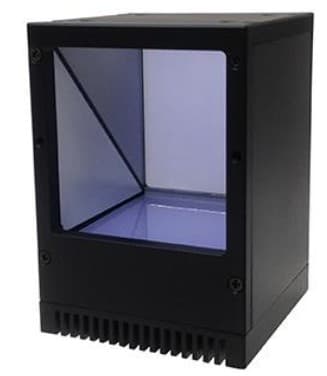
Falcon
FHFV-Si50N-W
High-power / high-intensity, Field of view (FOV) 50 × 50 mm, White, 1 – 30 mm working distance
Price and availability on request
Falcon
FHFV-Si50N-G
High-power / high-intensity, Field of view (FOV) 50 × 50 mm, Green, 525 nm, 1 – 30 mm working distance
Price and availability on request
Falcon
FHFV-Si50N-B
High-power / high-intensity, Field of view (FOV) 50 × 50 mm, Blue, 470 nm, 0 – 30 mm working distance
Price and availability on request

Falcon
FHFV-Si50N-UV24-375
High-power / high-intensity, Field of view (FOV) 50 × 50 mm, UV, 375 nm, 1 – 30 mm working distance
Price and availability on request

Falcon
FLFV-Si70N2-W
Standard, Field of view (FOV) 70 × 70 mm, White, 1 – 30 mm working distance
Price and availability on request
Falcon
FLFV-Si70N2-G
Standard, Field of view (FOV) 70 × 70 mm, Green, 525 nm, 1 – 30 mm working distance
Price and availability on request
Falcon
FLFV-Si70N2-B
Standard, Field of view (FOV) 70 × 70 mm, Blue, 470 nm, 1 – 30 mm working distance
Price and availability on request
Falcon
FLFV-Si70N2-R24
Standard, Field of view (FOV) 70 × 70 mm, Red, 626 nm, 1 – 30 mm working distance
Price and availability on request
Falcon
FLFV-Si70N2-IR24
Standard, Field of view (FOV) 70 × 70 mm, Infrared, 850 nm, 1 – 30 mm working distance
Price and availability on request
Coaxial lights are incident-light lights: they direct light from the camera side through a beam splitter almost along the camera axis onto the part. The beam splitter directs light onto the part while the camera looks through the same assembly. A flat surface square to the camera returns a great deal of light into the lens. Tilted, recessed, rough or differently reflecting areas send back a different share and stand out in the image. Whether a feature ends up bright or dark comes down to material, geometry, orientation and exposure.
That makes coaxial light a strong candidate on largely flat, reflective parts. Curvature, pronounced tilt, deep structures or a part that moves around will introduce brightness gradients and shading. The lighting controls the optical path, but it will not remove every reflection, and any blanket approval for metal, glass or printed circuit boards would be meaningless without a specific part.
Look at the emitting area or illuminated field together with the camera field of view. An illumination dimension that matches on paper is not the same as even usability out to the edge of the image. Lens, aperture, working distance, part tilt and mechanical openings all shape the area you can really use.
Our product data does not use the same field names for illumination and housing dimensions everywhere, so compare the dimensional drawing and manufacturer data rather than relying on a single filter value. The lens also has to fit mechanically into the optical path, and in tight installations the housing height and cable exit matter as much as the emitting area.
A technical shortlist calls for the following:
Wavelength, sensor, lens, filter and beam splitter have to work together optically, which matters especially for IR and UV versions. Working distance and IP rating are missing from some of the listed product data, and those values must never be inferred from similar models.
A ring light usually mounts more compactly around the lens, but it creates different bright spots on specular surfaces. Dark-field lighting puts more weight on topographic and scattering features. A dome light spreads light from many directions and looks calmer on curved, complex reflective parts. None of these classes wins outright; the feature and the geometry of the part decide.
For a comparison, supply the permissible variation in position and surface alongside good and bad parts. Keep camera, lens and exposure as constant as possible between test versions. That way you can see whether the contrast really comes from the lighting geometry and whether it survives inside your process limits.
Where you plan to use polarization, test it as part of the complete optical path. Polarizing filters change certain reflection components, yet they cost light and cannot make up for the wrong geometry. Before ordering, also record the source and revision of the dimensional, controller and spectral information. That matters especially when you are replacing an existing model or when similar versions are documented to differing levels of detail.
Next technical step
Send us the surface, inspection feature, field of view, working distance and your camera and lens data. We compare suitable product data and make clear which effects still have to be confirmed on the part.
Describe your optical setup